What Are Dofollow Links? The Default Standard for Link Equity

AI Summary
What are dofollow links? Dofollow links are standard HTML links with no rel attribute on the categories Google filters. They are followed by default and pass link equity from the linking page to the linked page, which is the foundation of the link-based authority system Google’s ranking algorithms use.
What it is and who it is for: Dofollow links are the default standard for any site building backlinks, earning editorial mentions, or trying to grow domain authority. They matter most for sites in competitive topical spaces where link-based signals are part of the differentiator between ranking and not ranking.
The rule: There is no rel=”dofollow” HTML attribute. The terminology emerged in the SEO community as the natural opposite of nofollow. Unmarked links are followed automatically, and that default-followed status is what makes dofollow the foundation rather than a special configuration.
Table of Contents
What Dofollow Actually Means
The first thing worth stating directly is that dofollow is not an HTML attribute. There is no rel="dofollow" value in the HTML specification, and writing rel="dofollow" on a link does nothing functional. The link would behave the same way without the attribute because the attribute does not exist in any meaningful sense.
The terminology emerged in the SEO community in the mid-2000s after the introduction of nofollow. Operators needed a word for the opposite of nofollow, and “dofollow” was the natural pairing. The community adopted it, the term stuck, and twenty years later most discussions of links use the term as if it were a real attribute even though it functionally describes the default state of any unmarked link.
What matters operationally is what dofollow describes rather than what the term technically is. A dofollow link is a standard HTML anchor tag with no rel attribute on the categories Google filters (nofollow, sponsored, ugc). The link is followed automatically by Google’s crawlers, and the linked page receives a portion of the linking page’s authority through the link. The default-followed status is what makes the entire link-based ranking system work.
The shorthand version: dofollow describes the default behavior of an unmarked link. The work of building dofollow links is the work of earning unmarked links from quality sites, which is exactly the foundational work of editorial link building.
For the broader context on how dofollow fits with the other link attributes, the Pillar guide on Link Types and Attributes covers the full framework. The sibling articles on Nofollow Links, Sponsored and UGC Attributes, and Anchor Text and Link Context cover the other dimensions.
How Link Equity Flows Through Dofollow Links
The mechanism that makes dofollow links matter for SEO is link equity flow. The original PageRank paper described it in mathematical terms. A page passes a portion of its authority to every page it links to through dofollow links, and the receiving page accumulates authority from every dofollow link pointing at it. The accumulated authority across the web is part of how Google’s systems evaluate page importance.
The contemporary framework is more sophisticated than the original PageRank model, but the underlying mechanism remains. The amount of equity a dofollow link passes depends on several factors. The linking page’s own authority. The number of other dofollow links on the linking page (the equity is divided across them). The relevance of the linking page to the linked page. The position of the link within the linking page. The surrounding text context. The anchor text used. The natural pattern of links on the linking site.
The implication is that not all dofollow links are equal. A dofollow link from an authoritative editorial site, in a contextually relevant article, with natural anchor text, surrounded by supporting content, passes substantially more equity than a dofollow link from a thin site, in a generic listicle, with optimized anchor text, surrounded by other commercial links. The label is the same. The signal is different.
The third-party metrics that approximate link equity, including Domain Rating from Ahrefs and Domain Authority from Moz, attempt to model this evaluation but produce only rough approximations of what Google’s systems actually evaluate. The metrics are useful for relative comparisons within a tool but do not directly measure the equity Google’s systems calculate. Operators who optimize for the third-party metrics without understanding what they actually represent end up with profiles that look authoritative in tools but fail to translate to ranking benefit.
Why Dofollow Is the Default Standard
The default-followed status of unmarked links is intentional. The web’s link graph was designed to function as an editorial endorsement system, where one page linking to another represented a recommendation that the linked page was worth visiting. The original assumption was that most links would be editorial, and the system was built around that assumption.
The default makes the system work at scale. If every link required explicit marking to be followed, the overhead would be enormous and adoption would be inconsistent. The default-followed approach means that any site publishing a link without thought about attribution is publishing a followed link, which is consistent with the original assumption that links represent editorial decisions.
The trade-off is that the default also means commercial links, paid placements, and links the site does not actually endorse get treated as editorial unless the site explicitly marks them otherwise. This is why the attribute system exists. The default favors editorial use, and the explicit attributes give site owners tools to opt out of the default when the link is not editorial.
The implication for operators is that the default-followed status is doing the work of treating editorial links as editorial automatically. Sites that publish high-quality editorial content with natural links to authoritative sources do not need to do anything special. The links are followed by default and pass the appropriate signals. The work is in the editorial discipline of publishing content worth linking to and linking to sources worth citing.
Evaluating Dofollow Link Quality
Not all dofollow links are worth pursuing. The evaluation framework for dofollow link quality breaks across several dimensions, and operators who understand the dimensions can prioritize their link-building efforts accordingly.
The first dimension is the linking site’s authority within the relevant topical neighborhood. A dofollow link from an authoritative site in the same topic area as the linked content passes substantially more equity than a dofollow link from an authoritative site in an unrelated topic. Topical relevance is a multiplier on raw authority, and operators who chase generic high-authority links without considering topical fit produce profiles that look strong in tools but fail to translate to ranking benefit in the relevant niches.
The second dimension is the linking page’s own authority and engagement. A dofollow link from a deep, authoritative page on a high-authority site passes more equity than a dofollow link from a thin or low-engagement page on the same site. The page-level authority varies substantially within a single domain, and operators who treat all links from a domain as equivalent miss this dimension.
The third dimension is the link’s editorial nature. A dofollow link that emerged from a journalist’s editorial decision to cite the linked page is fundamentally different from a dofollow link the linking site agreed to publish in exchange for content or compensation. Google’s systems have grown more capable of distinguishing editorial links from negotiated links, and the gap between what the two pass in equity has widened over time.
The fourth dimension is the natural fit within the linking page. A dofollow link that genuinely fits the surrounding content, where the link makes the page better for the reader, passes more equity than a link that was clearly inserted to exist rather than to serve the reader. The systems evaluate whether the link feels organic to the page or feels like it was added for SEO purposes.
The fifth dimension is the link’s persistence. A dofollow link from an authoritative source that has remained in place for years passes more equity than a fresh link from the same source, because the persistence signals the editorial decision has held up over time. Sites that build links through tactics that produce short-term placements (links that get removed during periodic content audits) accumulate equity profiles that decay rather than compound.
For more on the broader credibility infrastructure that supports earning quality dofollow links, the Credibility discipline covers the operational architecture.
Dofollow vs Nofollow, Sponsored, and UGC
The relationship between dofollow and the explicit attributes is the framework that operators need to understand to make sense of link evaluation. The four states a link can occupy each carry different signals.
Dofollow is the default. The link is followed, equity is passed, and the linking site is treated as having made an editorial decision to endorse the linked page. No rel attribute is needed because dofollow is what unmarked links do automatically.
Nofollow is the explicit opposite. The link is treated as a hint that the linking site does not endorse the destination, and equity is generally not passed (though the 2019 reframing means the systems consider nofollow as guidance rather than as an absolute directive). Nofollow is the right attribute for links the site is required to publish but does not want to be associated with as endorsement.
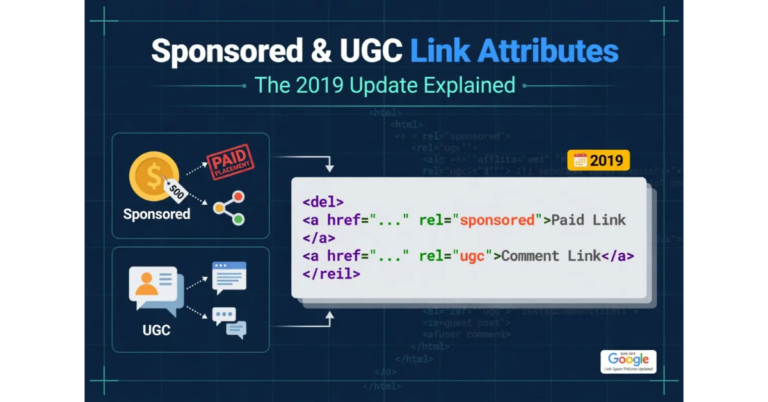
Sponsored is the paid placement attribute. The link is treated as a paid relationship between the linking site and the linked page, and equity is not passed. Sponsored is required by Google’s link spam policies for any link where compensation is involved, including sponsored content, paid guest posts, and many affiliate placements.
UGC is the user-generated content attribute. The link is treated as content the site did not directly create or endorse, with equity generally not passed but considered in context. UGC applies to blog comments, forum posts, and any content the site owner did not author.
The relationship matters operationally because the wrong attribute on the wrong link creates problems. Marking editorial links as nofollow weakens the linking site’s credibility profile by suggesting the site does not stand behind its own citations. Marking paid links as dofollow violates Webmaster Guidelines and can trigger manual action. The attribute system requires deliberate use, and the default of dofollow is correct for the editorial cases that make up most of what a healthy site publishes.
Earning Dofollow Links the Right Way
The work of earning quality dofollow links breaks into a small number of strategic patterns that produce durable results, and a much larger number of tactical patterns that produce short-term metrics without durable benefit. The strategic patterns are worth understanding because they describe the actual mechanism by which sites earn the kind of editorial dofollow links that move rankings.
The first pattern is publishing content worth linking to. The most reliable way to earn editorial dofollow links is to produce content that journalists, researchers, and other authoritative voices in the topic area genuinely want to cite. Original research. Substantive analysis. Data nobody else has. First-hand experience documented in ways that fit how the field actually thinks about the topic. Content that meets this bar attracts links over time as the right people discover it. Content that does not meet this bar struggles to earn editorial links regardless of outreach effort.
The second pattern is participating in the topic conversation where it happens. Editorial relationships emerge from sustained participation in industry conversations, conferences, podcasts, and platforms where the topic’s recognized voices already engage. The relationships produce link opportunities through the natural flow of journalism and analysis, where writers covering the topic reach out to recognized voices for input. Sites that participate substantively become part of the conversation. Sites that try to insert themselves through outreach without participation produce weaker results.
The third pattern is creating link-worthy assets that serve the topic. Comprehensive guides. Original frameworks. Useful tools. Resources that other sites in the topic area benefit from referencing because the resource genuinely helps their readers. The asset becomes a natural link target, and the linking is voluntary because the asset earns the citation.
The fourth pattern is the slow accumulation of brand recognition. As a site or operator becomes recognized in the topic area, links accumulate without active outreach because the site shows up in searches journalists run, in conversations colleagues have, and in the natural flow of citing recognized sources. The compounding phase is where dofollow link acquisition shifts from active work to passive accumulation, and it is the phase that mature authority profiles depend on.
For the broader content production discipline that supports earning dofollow links, the Content discipline covers the operational architecture.
Common Dofollow Mistakes
The most common mistakes operators make with dofollow links break across two categories. Mistakes in earning dofollow links, and mistakes in publishing dofollow links from the operator’s own site.
The first common mistake on the earning side is the volume-over-quality trap. Sites pursue large numbers of dofollow links from low-quality sources rather than smaller numbers from high-quality sources. The third-party metrics treat the bulk approach favorably because the metrics are easier to calculate from raw counts than from quality-weighted evaluations. Google’s systems treat the approach unfavorably because the link patterns do not match what genuine editorial relationships produce.
The second common mistake on the earning side is the niche mismatch. Sites pursue dofollow links from authoritative sites in unrelated topics because the authority numbers are higher. The links pass less equity than the metrics suggest because topical relevance is a multiplier on raw authority. Operators who understand the multiplier focus on links from authoritative sites in their actual topic area even when the raw authority numbers are lower.
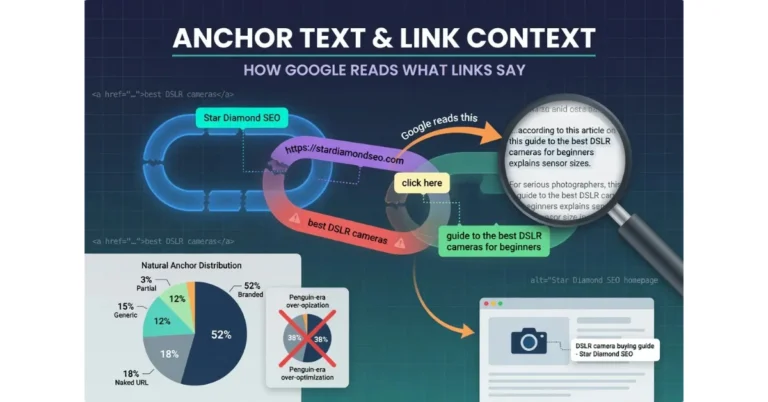
The third common mistake on the earning side is the over-optimized anchor text. Sites that earn dofollow links through guest posting or paid placements often control the anchor text and select exact match phrases that signal manipulation. The dofollow links carry the signal but the over-optimized pattern triggers ranking suppression that offsets or eliminates the benefit. The fix is to use branded anchors and natural variations even when the operator controls the anchor selection.
The first common mistake on the publishing side is the over-broad nofollow. Sites apply nofollow to all external links as a defensive measure, treating it as a way to keep equity within the site. The practice signals to Google’s systems that the site is not making editorial judgments about which sources it endorses, which weakens the site’s own credibility profile. Real editorial sites publish dofollow links to authoritative sources because that is what editorial citation looks like.
The second common mistake on the publishing side is the missing sponsored attribute. Sites publish what should be paid placements as standard dofollow links because the operator either does not understand the requirement or chooses to ignore it. The pattern is the most common Webmaster Guidelines violation in the link space and a direct trigger for manual action. The fix is the editorial discipline of marking compensated links appropriately even when the temptation is to maximize equity passed.
Verdict
Dofollow links are the default standard for the link-based authority system Google’s ranking algorithms have used since the original PageRank paper. The terminology is technically a misnomer because no rel=”dofollow” HTML attribute exists, but the term has stuck in the SEO community as shorthand for the default-followed behavior of unmarked links. What matters operationally is the mechanism, not the label.
The equity passed by a dofollow link depends on multiple factors including the linking site’s authority within the relevant topical neighborhood, the linking page’s own authority, the link’s editorial nature, the natural fit within the surrounding content, and the link’s persistence over time. Not all dofollow links are equal, and operators who treat them as equal produce profiles that look authoritative in third-party tools but fail to translate to ranking benefit.
The work of earning quality dofollow links is the work of producing content worth citing, participating in the topic conversation where it happens, creating link-worthy assets that serve the field, and letting the compounding phase of brand recognition accumulate links over time. The strategic patterns produce durable results. The tactical patterns of bulk acquisition produce short-term metrics without durable benefit.
For the broader framework that ties dofollow together with the other link attributes, the Pillar guide covers the full system. The sibling article on Nofollow Links covers the explicit opposite of dofollow and the 2019 reframing as a hint. The article on Sponsored and UGC Attributes covers the 2019 update and the disclosure requirements for paid links. The article on Anchor Text and Link Context covers the visible link text and surrounding context that shape how dofollow links are evaluated.
Frequently Asked Questions
What does dofollow mean in SEO?
Dofollow describes a standard HTML link with no rel attribute on the categories Google filters (nofollow, sponsored, ugc). The link is followed by Google’s crawlers automatically and passes link equity from the linking page to the linked page. There is no actual rel=”dofollow” attribute in HTML; the term is SEO industry shorthand for the default behavior of unmarked links.
Is dofollow a real HTML attribute?
No. There is no rel=”dofollow” value in the HTML specification. Writing rel=”dofollow” on a link does nothing functional because the attribute does not exist. The terminology emerged in the SEO community as the natural opposite of nofollow and stuck despite not being a real attribute.
How do dofollow links pass link equity?
A dofollow link passes a portion of the linking page’s authority to the linked page. The amount depends on factors including the linking page’s own authority, the number of other dofollow links on the page, the relevance between linking and linked pages, the link’s position in the page, the surrounding context, and the anchor text used. Not all dofollow links pass equal equity.
What makes a high-quality dofollow link?
A high-quality dofollow link comes from an authoritative site in the relevant topical neighborhood, on an authoritative page within that site, as a result of an editorial decision rather than a negotiated placement, with natural fit within the surrounding content, and persistence over time. Topical relevance is a multiplier on raw authority.
Are dofollow links better than nofollow links?
For passing direct link equity, yes. Dofollow links pass equity by default while nofollow links generally do not. However, nofollow links from authoritative editorial sources still contribute to the broader Trust signal and brand mention pattern Google’s systems use, so the binary framing of “dofollow good, nofollow bad” oversimplifies how the systems actually evaluate links.
How many dofollow links does my site need to rank?
The number depends on the competitive landscape of the topic. Some low-competition topics rank with single-digit dofollow link counts. Highly competitive topics may require dozens to hundreds of quality dofollow links to compete with established sites. The quality of the links matters substantially more than the quantity, and a small number of strong editorial links typically outperforms a large number of weak links.
Can I tell if a link is dofollow?
Yes. Inspect the HTML of the linking page and look at the anchor tag. If there is no rel attribute, or if the rel attribute does not include nofollow, sponsored, or ugc, the link is dofollow. Browser extensions like NoFollow Simple highlight nofollow links visually, making it easy to identify which links on a page pass equity by default.
Should I mark all my outbound links as dofollow?
No. The default of dofollow is automatic on unmarked links, so no marking is needed. The work is in the editorial discipline of using the appropriate explicit attribute when a link is not editorial. Mark paid links as sponsored. Mark user-generated content as UGC. Use nofollow when applicable. Leave editorial citations as standard followed links.