What Are Nofollow Links? When and Why Google Stops Following
AI Summary
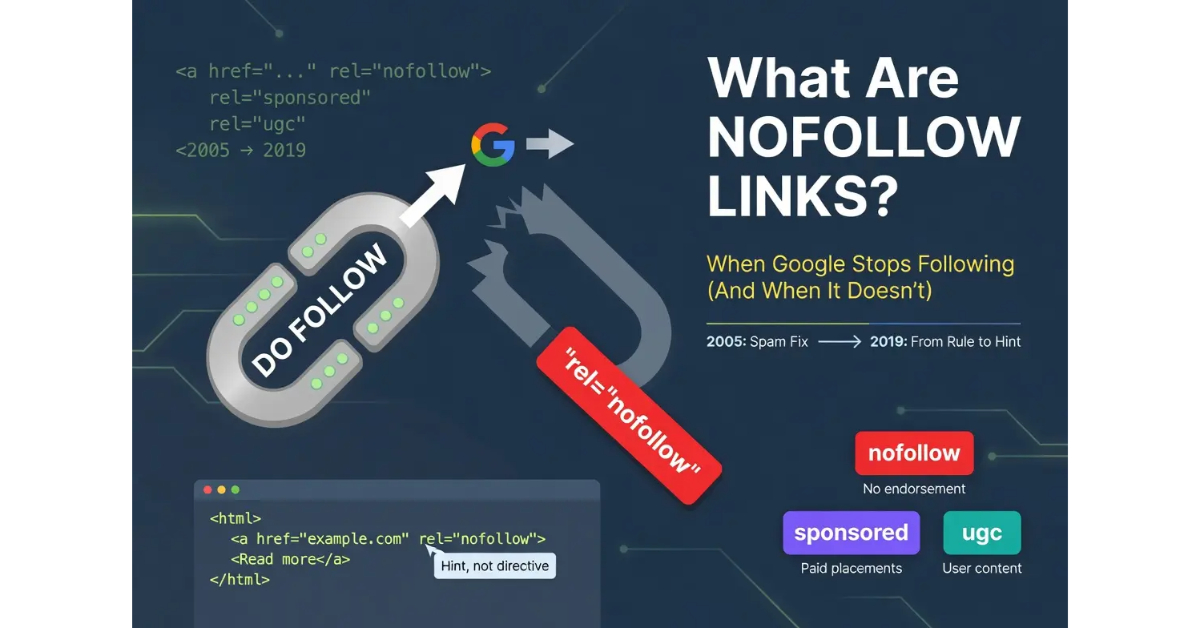
What are nofollow links? Nofollow links are links with the rel=”nofollow” attribute that signal to Google the linking site does not endorse the destination. They were introduced in January 2005 to combat blog comment spam and reframed in September 2019 from a directive to a hint.
What it is and who it is for: Nofollow is the explicit attribute for links a site is required to publish but does not want to endorse. It matters most for sites with comment sections, forums, paid placements, and content the site cannot vouch for editorially.
The rule: Nofollow links generally do not pass equity, but the 2019 reframing means Google’s systems consider nofollow as guidance rather than as an absolute directive. Editorial nofollow links from authoritative sources still contribute to Trust signals and brand mention patterns the systems use.
Table of Contents
What Nofollow Means and How It Works
Nofollow is an HTML attribute applied to links to signal that the linking site does not endorse the destination. The technical implementation is the rel="nofollow" value on an anchor tag. When Google’s crawlers encounter a nofollow link, the systems treat it differently from a standard followed link.
The original mechanism was simple. A nofollow link was excluded from the link graph for ranking purposes. The crawler would still follow the link to discover the destination, but the destination would not receive the equity flow that an unmarked link would pass. The attribute functioned as a binary directive that turned off the equity-passing behavior on a per-link basis.
The 2019 update changed this from a directive to a hint, which is covered in detail later in this article. The contemporary mechanism is more nuanced. The systems still treat nofollow as a strong signal that the linking site does not endorse the destination, but they reserve the option to consider the link in context rather than excluding it entirely from evaluation.
The shorthand version: nofollow tells Google that the linking site is not vouching for the destination. The signal is strong but not absolute. The framework recognizes that some nofollow links emerge from genuine editorial decisions to disclaim endorsement and others emerge from over-broad application that loses information.
For the broader context on how nofollow fits with the other link attributes, the Pillar guide on Link Types and Attributes covers the full framework. The sibling articles on Dofollow Links, Sponsored and UGC Attributes, and Anchor Text and Link Context cover the other dimensions.
The History: 2005 Introduction and the Spam Problem
The nofollow attribute was introduced in January 2005 by Google, Yahoo, and Microsoft as a coordinated response to a specific problem. Blog comment spam had grown into a substantial issue across the web. Spammers were posting comments on legitimate blogs purely to leave links to commercial sites, and the comment links were passing equity that the blog owners had not intended to pass.
The problem was structural. Blog platforms made it easy to publish user comments. The platforms also made the comment links standard followed links by default, which meant any spammer with a comment-posting script could accumulate equity-passing links across thousands of blogs in a single afternoon. The economics of spam favored the spammers because the cost of automated commenting was near zero and the equity gained was real.
The nofollow attribute solved the problem by giving site owners a way to publish user comments without telling search engines those links represented editorial endorsement. Blog platforms updated their comment systems to apply nofollow automatically to user-submitted links, and the spam economics collapsed because the links no longer passed the equity that made the spam profitable.
The introduction was successful in its original purpose. Blog comment spam decreased substantially in the years following the rollout, not because spammers stopped posting comments but because the equity incentive disappeared. The attribute did exactly what it was designed to do, and it has remained part of the framework ever since.
What the original introduction did not anticipate was the broader use of nofollow that emerged over the following decade. Site owners began applying nofollow to many categories of links beyond user-generated comments, including paid placements, links to competitors, links to sources the site preferred not to endorse for various reasons, and links the site was required to publish but did not want to be associated with. The over-broad application created secondary problems that the 2019 update was designed to address.
The 2019 Reframing: From Directive to Hint
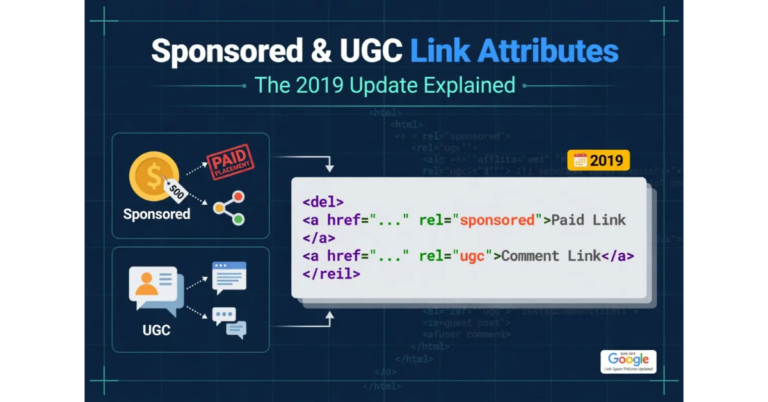
In September 2019, Google announced two significant changes to how the nofollow framework operates. The first was the introduction of two new attributes, rel="sponsored" for paid placements and rel="ugc" for user-generated content. The second was the reframing of nofollow itself from an absolute directive to a hint.
The reasoning behind the reframing was direct. Google had been observing for years that some links marked nofollow were genuinely editorial. A site might apply nofollow defensively because the platform applied it automatically, or because the site owner had been advised to use nofollow on all external links, or because the site followed an outdated convention from when nofollow was first introduced. In those cases, treating nofollow as an absolute filter meant Google’s systems were ignoring information that would have helped them evaluate the broader trust graph of the web.
The hint framing solved this by allowing the systems to consider nofollow as guidance rather than as an absolute instruction. A nofollow link from an authoritative editorial site might still inform the systems’ evaluation of the linked page, even though the link does not pass equity in the traditional sense. The systems make the determination based on context, and the context includes the linking site’s overall pattern, the link’s editorial nature, and many other signals.
The practical effect for operators is mixed. For site owners using nofollow correctly, the change does not affect day-to-day work. The attribute still signals what the operator wants it to signal. For Google’s systems, the change provides flexibility to recover information that strict directive-following would have discarded. For the broader web, the change is part of a longer trajectory of moving from rigid rule-based interpretation toward contextual evaluation that produces better outcomes on average.
One detail worth flagging is that the hint framing does not mean nofollow is now ignored. The systems still treat nofollow as a strong signal in most cases. The change is that the systems reserve the option to weigh the signal against other context rather than applying it as an absolute filter. Operators who use nofollow correctly should expect the attribute to behave the way it always has on most evaluations.
When to Use Nofollow in 2026
The 2019 introduction of sponsored and UGC means nofollow is no longer the catch-all attribute it was for the previous fourteen years. The contemporary best practice is to use the most specific applicable attribute rather than defaulting to generic nofollow. The specificity helps Google’s systems understand the actual relationship and reduces the chance of misinterpretation.
Use sponsored for paid placements. Any link where compensation is involved between the linking site and the linked page should carry rel="sponsored". This includes sponsored content, paid guest posts, affiliate links in many contexts, and any placement that resulted from a commercial transaction. The sponsored attribute is required by Google’s spam policies for paid relationships, and using nofollow as a fallback is acceptable but no longer the preferred choice.
Use UGC for user-generated content. Any link placed by a user rather than by the site owner should carry rel="ugc". This includes blog comments, forum posts, profile bio links, and any content the site did not directly create or endorse. The UGC attribute is the appropriate signal for content the site hosts but does not vouch for.
Use nofollow for everything else where the site does not want to endorse the destination. This includes links the site is required to publish for legal or contractual reasons, links to controversial sources the site references but does not endorse, and links the site has determined should not pass equity for other editorial reasons. Nofollow remains the appropriate generic attribute when neither sponsored nor UGC applies.
The attributes can be combined when multiple categories apply. A paid link inside user-generated content can carry both rel="sponsored ugc" to signal both relationships. The combination is more informative than either attribute alone because it tells Google’s systems exactly what the link is.
For more on the broader credibility infrastructure that supports proper link attribution, the Credibility discipline covers the operational architecture.
Nofollow vs Noindex: The Common Confusion
The two attributes operators most frequently confuse are nofollow and noindex. They sound similar, they both involve telling Google to do something different from the default, and they both relate to how Google’s systems treat content. The functions are fundamentally different.
Nofollow is a link attribute. It applies to individual links and signals that the linking site does not endorse the destination. The attribute affects how the link is evaluated for equity passing but does not affect whether the destination is indexed or appears in search results.
Noindex is a meta directive. It applies to entire pages and signals that the page should not be included in Google’s search index. The directive affects whether the page can appear in search results at all but does not affect how individual links on the page are evaluated.
The distinction matters operationally because using the wrong one produces unintended consequences. A site that wants to keep a thin or duplicate page out of the search index needs noindex on that page. Using nofollow on links pointing to the page does not solve the problem because the page can still be indexed if Google discovers it through other means. A site that wants to publish user comments without endorsing them needs nofollow or UGC on the comment links. Using noindex on the page does not solve the problem because it removes the entire page from the index, which is rarely the goal.
The correct mental model is that nofollow operates on individual links and noindex operates on entire pages. The two can be used together when both are needed. A page with sensitive content might use noindex to keep it out of search results and also use nofollow on outbound links from that page. The combination signals exactly what the operator wants for both the page and the links.
Do Nofollow Links Pass Any Value?
The honest answer is more complicated than the binary framing the SEO industry typically uses. Nofollow links generally do not pass direct equity in the way unmarked links do, but the broader picture includes several mechanisms by which nofollow links contribute to a site’s overall authority profile.
The first mechanism is the 2019 hint reframing. Google’s systems may consider nofollow links in context rather than excluding them entirely from evaluation. An editorial nofollow link from an authoritative site in the relevant topical neighborhood may inform the systems’ understanding of the linked page even though it does not pass traditional equity. The amount of contribution depends on context and is not predictable on a per-link basis.
The second mechanism is the brand mention pattern. Nofollow links are still mentions of the linked site, and the broader pattern of mentions across the web contributes to the brand-based signals Google’s systems use to estimate Authoritativeness. A nofollow link in a major publication is part of the same recognition pattern that links contribute to, even though it does not pass equity directly.
The third mechanism is the referral traffic and engagement that nofollow links produce. A nofollow link in a high-traffic editorial context can drive substantial referral traffic, and the engagement signals from that traffic (low bounce rate, time on page, return visits) contribute to the linked site’s overall quality profile. The mechanism is indirect, but the contribution is real.
The fourth mechanism is the natural anchor text distribution. Profiles that include both followed and nofollow links from a variety of sources look more natural than profiles that consist entirely of followed links. The naturalness itself is a signal, and operators who pursue only followed links produce profiles that read as engineered.
The implication for operators is that nofollow links are not worthless. They contribute to the broader authority profile through several mechanisms, even though they do not pass direct equity in the way the SEO industry has traditionally framed link evaluation. Sites that earn editorial nofollow links from authoritative sources should treat them as legitimate parts of their backlink profile rather than dismissing them because the attribute is present.
Common Nofollow Mistakes
The most common nofollow mistakes operators make are predictable. They show up across new sites learning the framework, established sites that have grown careless about attribution, and platforms that have applied nofollow defensively without considering the trade-offs.
The first common mistake is the over-broad application. Sites apply nofollow to all external links as a defensive measure, treating it as a way to keep equity within the site. The practice signals to Google’s systems that the site is not making editorial judgments about which sources it endorses, which weakens the site’s own credibility profile. Real editorial sites publish unmarked links to authoritative sources because that is what editorial citation looks like.
The second common mistake is the wrong attribute for the situation. Sites use generic nofollow for links that should be sponsored or UGC. The attribute still works, but the signal is less precise than it could be. Google’s spam policies specifically request the use of sponsored for paid links, and using nofollow as a fallback is acceptable but no longer the preferred choice. Sites that update their attribute usage to match the post-2019 framework signal more sophisticated understanding of the system.
The third common mistake is the confusion with noindex. Sites use nofollow when they meant to use noindex, or vice versa, and the result is unintended consequences. The mental model that operators need is that nofollow operates on individual links and noindex operates on entire pages. The two solve different problems and using the wrong one does not solve the problem the operator was trying to address.
The fourth common mistake is the manual nofollow on links the platform already nofollows. Some content management systems and platforms apply nofollow automatically to certain link categories. Operators who manually add nofollow on top of the automatic application create redundant attributes that signal nothing additional and may suggest the operator does not understand what the platform is already doing.
The fifth common mistake is the failure to update legacy nofollow on editorial links. Sites that adopted blanket nofollow policies in earlier eras may have nofollow on links that should be unmarked under contemporary best practice. Periodic audits of the outbound link profile catch these legacy applications and allow the operator to update them to match current standards.
Verdict
Nofollow is the explicit link attribute that signals to Google the linking site does not endorse the destination. It was introduced in January 2005 to address blog comment spam, and the introduction was successful in its original purpose. The 2019 reframing from a directive to a hint, paired with the introduction of sponsored and UGC attributes, modernized the framework to handle the broader range of non-editorial link relationships that emerged over the intervening years.
The contemporary best practice is to use the most specific applicable attribute. Sponsored for paid placements. UGC for user-generated content. Nofollow for everything else where the site does not want to endorse the destination. The specificity helps Google’s systems understand the actual relationship and reduces the chance of misinterpretation.
The relationship between nofollow and noindex is the most common point of confusion. Nofollow operates on individual links and affects equity flow. Noindex operates on entire pages and affects index inclusion. The two solve different problems and using the wrong one produces unintended consequences.
The honest answer on whether nofollow links pass value is that they do not pass direct equity but contribute to authority profiles through several indirect mechanisms. The 2019 hint framing, the brand mention pattern, the referral traffic, and the natural anchor text distribution all matter. Operators who dismiss nofollow links as worthless miss the broader context in which they contribute to the overall profile.
For the broader framework that ties nofollow together with the other link attributes, the Pillar guide covers the full system. The sibling article on Dofollow Links covers the default standard that nofollow opts out of. The article on Sponsored and UGC Attributes covers the 2019 update and the disclosure requirements for paid links. The article on Anchor Text and Link Context covers the visible link text and the surrounding context that shape how all link attributes are evaluated.
Frequently Asked Questions
What does rel=”nofollow” do?
The rel=”nofollow” attribute on a link signals to Google that the linking site does not endorse the destination. The link is generally not used for passing equity in the traditional ranking sense, though the 2019 reframing means Google’s systems consider nofollow as guidance rather than as an absolute directive.
When was nofollow introduced?
Google, Yahoo, and Microsoft introduced nofollow in January 2005 as a coordinated response to blog comment spam. The original purpose was to give site owners a way to publish user comments without telling search engines those links represented editorial endorsement.
What changed about nofollow in 2019?
In September 2019, Google reframed nofollow from a directive to a hint, meaning the systems would consider nofollow as guidance rather than as an absolute instruction. The same announcement introduced two new attributes, rel=”sponsored” for paid placements and rel=”ugc” for user-generated content.
Do nofollow links pass any SEO value?
Nofollow links do not pass direct equity but contribute to authority profiles through several indirect mechanisms. These include the 2019 hint framing that allows contextual consideration, the brand mention pattern, referral traffic and engagement signals, and the natural anchor text distribution that includes a mix of followed and nofollow links.
What is the difference between nofollow and noindex?
Nofollow is a link attribute that operates on individual links and affects how the link is evaluated for equity passing. Noindex is a meta directive that operates on entire pages and affects whether the page can appear in search results. The two solve different problems and using the wrong one produces unintended consequences.
Should I nofollow all my external links?
No. Applying nofollow to all external links signals to Google’s systems that the site is not making editorial judgments about which sources it endorses, which weakens the site’s own credibility profile. Editorial citations to authoritative sources should remain unmarked. Use nofollow only on links where the site genuinely does not want to endorse the destination.
Should I use nofollow or sponsored for paid links?
Use sponsored. Google’s link spam policies specifically request rel=”sponsored” for paid placements, and the contemporary best practice is to use the most specific applicable attribute. Nofollow remains acceptable as a fallback but is no longer the preferred choice for paid relationships.
Can a link be both nofollow and another attribute?
Yes. Link attributes can be combined when multiple categories apply. A paid link inside user-generated content can carry rel=”sponsored ugc” to signal both relationships. The combination is more informative than either attribute alone because it tells Google’s systems exactly what the link is.