ChatGPT SEO: How to Influence What AI Says About Your Brand
AI Summary
What is ChatGPT SEO? ChatGPT SEO is the practice of optimizing your brand’s content, authority signals, and online presence so that ChatGPT recommends, cites, or favorably mentions your brand when users ask questions relevant to your expertise. It is a subset of generative engine optimization focused specifically on how OpenAI’s models retrieve and present brand information.
What it is and who it is for: This article is for business owners and marketers who have noticed that ChatGPT recommends their competitors but not them, or who want to understand how ChatGPT decides which brands to mention before investing in optimization. It covers what influences ChatGPT’s brand recommendations, what you can realistically control, and what remains outside anyone’s control.
The rule: You cannot game ChatGPT the way early SEO practitioners gamed Google in 2005. There is no keyword density trick, no meta tag hack, no shortcut that reliably forces a language model to recommend your brand. What you can do is build the kind of online presence that a well-informed human would cite as a trusted source, because that is what the model is trained to approximate.
How ChatGPT Decides Which Brands to Recommend
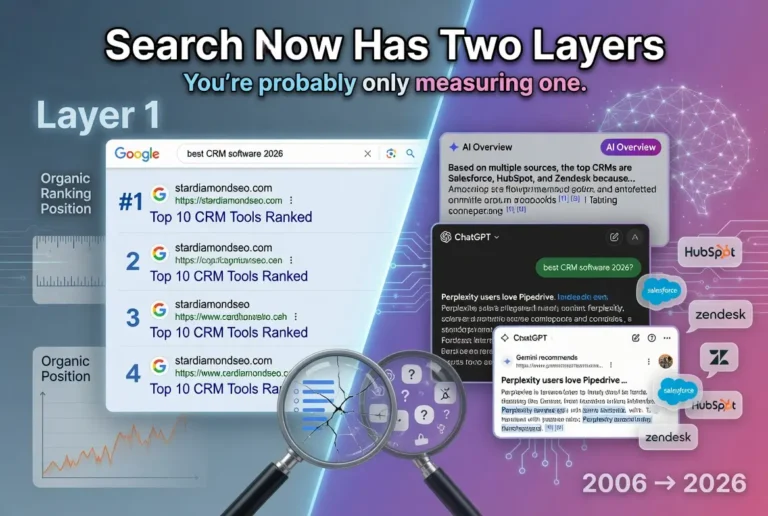
ChatGPT does not rank websites. It does not crawl pages. It does not maintain an index the way Google does. When someone asks “what’s the best project management tool for a small team?” and ChatGPT responds with five brand names, those names surfaced through a process that is fundamentally different from organic search ranking.
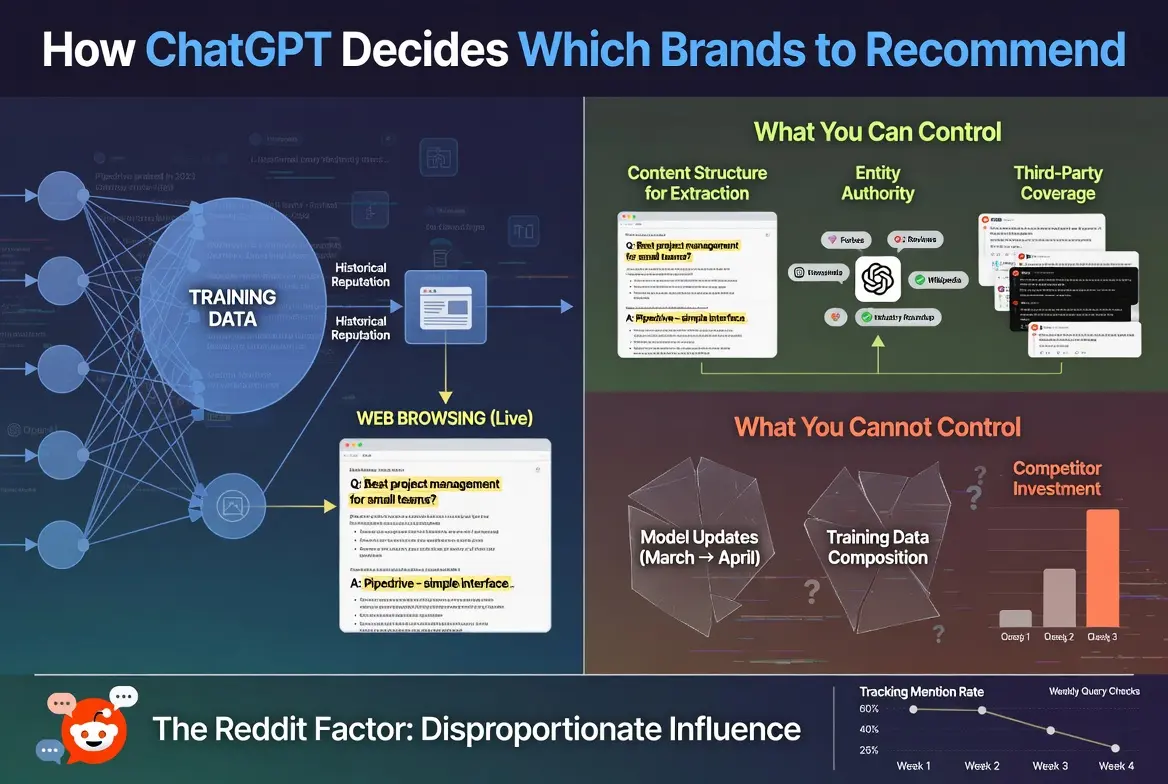
Two systems feed ChatGPT’s responses. The first is its training data: a massive corpus of web content, books, articles, and conversations that the model absorbed during training. Brands that were widely discussed, reviewed, recommended, and cited across high-quality sources during the training period are embedded in the model’s knowledge. The second is web browsing, where ChatGPT retrieves live information from the web during a conversation. Not every response triggers browsing. When it does, the retrieval favors authoritative, well-structured pages that directly answer the question being asked.
The practical implication is that ChatGPT’s brand recommendations are shaped by two timelines. Historical reputation, meaning how widely and favorably your brand was discussed across the web before the most recent training cutoff. And current web presence, meaning whether your content is structured, authoritative, and accessible enough that ChatGPT’s browsing retrieves it when the question is relevant.
This is not something I fully understood until I started testing it systematically. I assumed ChatGPT was mostly pulling from training data and that live content had minimal impact. That turned out to be wrong for a lot of commercial queries. ChatGPT’s browsing triggers more often than I expected on “best X for Y” type questions, and the pages it retrieves are not always the ones ranking highest on Google. Sometimes it pulls from a mid-authority site with exceptionally clear, structured content over a high-authority site with dense, hard-to-extract prose.
What You Can Actually Control
You cannot pay OpenAI to prioritize your brand. You cannot submit your site to ChatGPT the way you submit a URL to Google Search Console. You cannot optimize a meta tag that ChatGPT reads. The levers available to you are indirect, and they work over months rather than days. That does not make them weak. It makes them durable.
Content Structure for Extraction
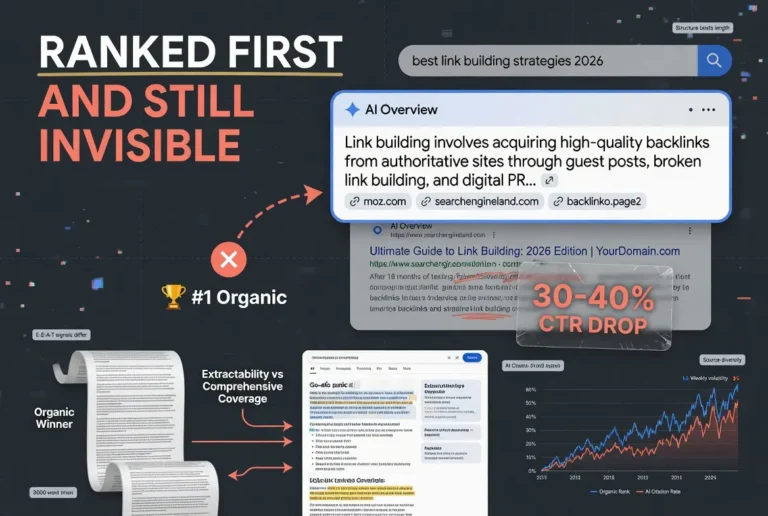
ChatGPT’s browsing retrieval favors content that answers questions directly and clearly. Pages organized with descriptive headings, concise paragraphs, and explicit answers to specific questions get extracted more reliably than pages that bury the answer inside long narrative sections. This does not mean dumbing content down. It means structuring it so the useful information is findable by a system that is scanning for relevance, not reading for pleasure.
FAQ sections are particularly effective for ChatGPT extraction. A well-written FAQ with specific questions and direct answers gives the model exactly the format it needs: a question that matches the user’s query and an answer it can synthesize into a response. This is not a theory. I have watched FAQ content from mid-authority sites get cited over comprehensive guides from high-authority sites because the FAQ format was more extractable.
Entity Authority
ChatGPT needs to recognize your brand as a legitimate entity in your category before it will recommend you. Entity recognition comes from consistent mentions across authoritative sources: industry publications, review sites, professional directories, Wikipedia (if applicable), and third-party content where your brand is discussed in context. A brand that exists only on its own website is invisible to ChatGPT’s training process. A brand that is mentioned across dozens of independent sources becomes part of the model’s knowledge about the category.
This is where E-E-A-T signals and ChatGPT optimization converge. The signals that Google uses to evaluate expertise, authority, and trust are the same signals that make a brand recognizable to language models. Author profiles, bylined content, citations in third-party publications, consistent brand mentions across the web. Building these signals for Google simultaneously builds them for ChatGPT. The work compounds.
Third-Party Coverage
ChatGPT draws heavily from third-party sources when making recommendations. Review sites, comparison articles, industry roundups, Reddit discussions, Quora answers. When someone asks “which SEO tools are worth paying for?” ChatGPT synthesizes from dozens of sources that discussed that question across the web. If your brand appears in those discussions frequently and favorably, the model learns to include you. If you are absent from the conversation, the model has no reason to surface you.
This means that some of the most effective ChatGPT SEO work happens off your own website. Getting reviewed, getting included in industry comparisons, getting discussed in communities where your audience participates. These are not new tactics. They have been part of digital PR and brand building for years. What changed is that the payoff now includes AI visibility on top of the traditional referral traffic and authority benefits.
What You Cannot Control
Model updates. OpenAI updates ChatGPT’s models regularly and without public changelogs. A brand that was consistently recommended in March can disappear in April because the model was retrained, the retrieval system was modified, or the weighting of training data shifted. You will not receive a notification. You will not see it in any dashboard. You will only know when you or a tracking tool checks the queries you care about and notices the change.
Training data composition. You do not know what web content was included in ChatGPT’s training data or how it was weighted. You cannot ensure that your best content made it into the training corpus. You cannot remove negative content from the training data. The training happened already. What you can do is influence the live web presence that ChatGPT’s browsing retrieves, which becomes more important with each model update as the balance shifts from static training knowledge toward real-time retrieval.
Competitor investment. If a competitor is investing heavily in the third-party coverage, content structure, and entity authority signals that ChatGPT favors, they will gain share of the AI conversation regardless of what you do. This is a competitive channel, same as organic search. The difference is that the competitive dynamics are less visible because there is no public ranking list. You only see the outcome when you query the platform and check who gets mentioned.
How ChatGPT Differs from Other AI Platforms
ChatGPT is not a search engine. That distinction matters for how you approach optimization.
Perplexity is a search engine that generates AI answers. It retrieves from the live web for every query and provides inline citations. Optimization for Perplexity looks closer to traditional SEO: create authoritative content, earn backlinks, structure for extraction. The feedback loop is faster because Perplexity cites live content rather than embedded training knowledge.
Google AI Overviews are generated from Google’s index, meaning the content Google has already crawled and ranked influences what appears in the AI Overview. Optimization for AI Overviews is deeply tied to traditional organic ranking signals. If Google trusts your page enough to rank it, that page has a better chance of being cited in an AI Overview. Not guaranteed, but correlated.
ChatGPT operates between these two. It has embedded training knowledge that does not change between updates and live browsing that retrieves current content. The embedded knowledge creates a momentum effect that the other platforms do not have: once your brand is “known” to ChatGPT from training data, that baseline persists until the next model update. Newer brands without training data presence rely entirely on having content that ChatGPT’s browsing retrieves, which is a harder starting position but not an impossible one.
The takeaway is that optimizing for ChatGPT alone is insufficient. The brands with the strongest AI visibility optimize for the principles that work across all platforms: authoritative content, structured for extraction, supported by third-party coverage, built on genuine trust signals. Platform-specific tactics have a shorter shelf life than foundational authority.
Tracking Whether ChatGPT Mentions Your Brand
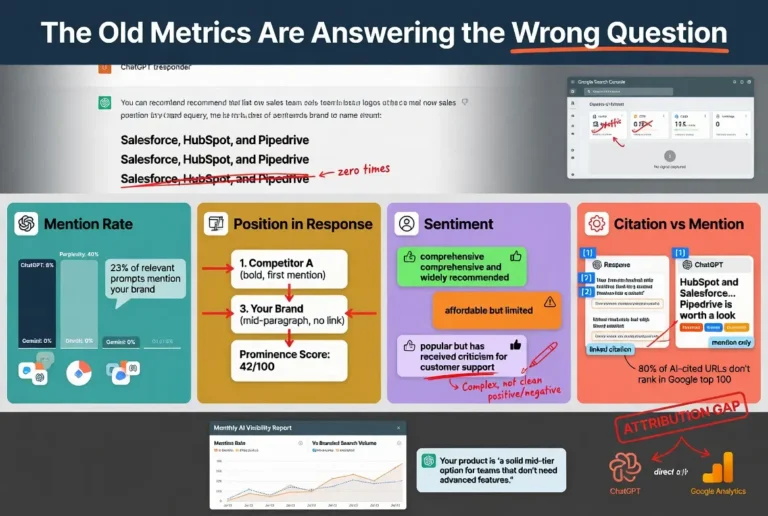
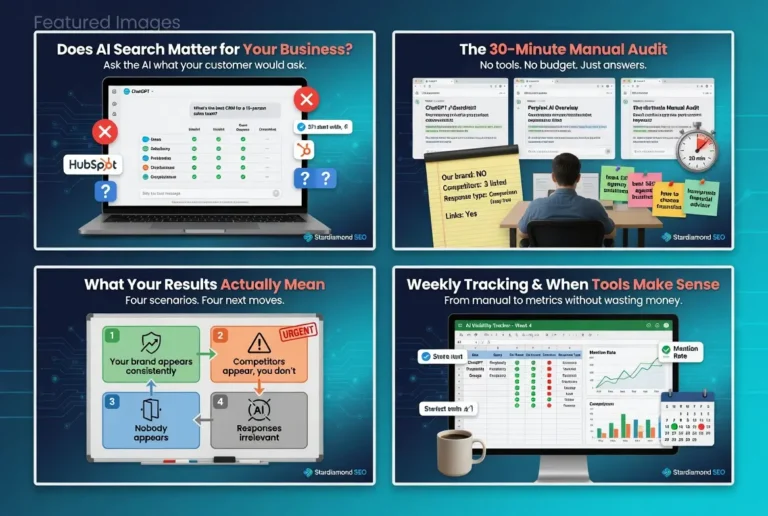
Manual tracking is where most businesses should start. Pick your ten most important commercial queries. Ask ChatGPT each one. Record whether your brand appears, which competitors appear, the position in the response (first mentioned, middle of a list, footnote), and the exact language used to describe your brand. Do this weekly.
The manual approach has a limitation that is worth naming: ChatGPT’s responses are not deterministic. The same query asked twice in the same session can produce different brand mentions. This variability means a single check is a sample, not a definitive answer. Weekly tracking across multiple queries produces a mention rate that smooths out the per-query noise. If you appear in 6 out of 10 queries one week and 5 out of 10 the next, your mention rate is roughly stable. If you drop from 6 to 2, something changed and it is worth investigating.
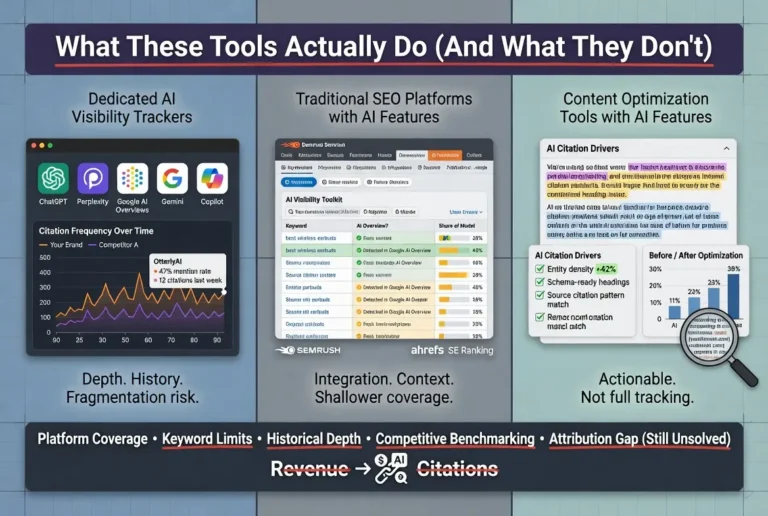
Automated tracking tools designed as a ChatGPT SEO tool handle this at scale. They query ChatGPT programmatically, store historical responses, and surface trends that manual tracking misses. The value is in the historical data: being able to see that your mention rate on ChatGPT dropped from 45 percent to 20 percent over three weeks tells you something is shifting even if you do not know the exact cause. Without historical tracking, you would never detect the decline because you would have no baseline to compare against.
One pattern I have noticed across the brands I have worked with: the ones that track consistently make better optimization decisions than the ones with better content who track sporadically. Measurement creates feedback loops. Without the feedback loop, optimization is guessing.
The Reddit Factor
Reddit deserves its own section because its influence on ChatGPT recommendations is disproportionate to what most marketers expect.
Reddit threads appear in ChatGPT’s training data at a high rate because Reddit discussions represent genuine user experiences and opinions, which is exactly the kind of content language models weight heavily for recommendation queries. When someone asks ChatGPT “which CRM is best for a small team?” and five users on r/smallbusiness recommended Pipedrive in a thread from 2024, that thread contributes to ChatGPT’s model of what “people recommend” for that query.
The same dynamic plays out on Perplexity, where Reddit accounts for a significant percentage of cited sources. The platform treats Reddit discussions as community-validated recommendations, which they often are.
This does not mean you should go astroturf Reddit. That is detectable, counterproductive, and against Reddit’s terms of service. What it means is that if your brand is not part of the genuine conversations happening in subreddits where your buyers participate, you are missing a citation surface that directly influences AI recommendations. Participating authentically in relevant communities, answering questions where your expertise adds value, being helpful without being promotional, these are the activities that build the kind of Reddit presence AI platforms weight. It is slow. It is not scalable the way content production is. And it works.
What Does Not Work
Publishing content stuffed with “ChatGPT recommends [your brand]” or similar self-referential optimization. The model does not parse your content for instructions about what to recommend. It evaluates your content as a potential source of information to synthesize. Self-referential brand promotion reads as promotional content, which language models tend to weight lower for recommendation queries precisely because it is not independent validation.
Paying for fake reviews or manufactured third-party coverage. ChatGPT does not distinguish between real and fake reviews at a per-review level, but the pattern-level signals of manufactured coverage (low-authority sites, repetitive language, no organic engagement) are exactly the signals that quality-focused retrieval systems learn to downweight. This was true for Google in 2015 and it is true for AI platforms now.
Optimizing specifically for ChatGPT’s current behavior without building foundational authority. ChatGPT’s model changes. The retrieval system changes. The specific content that gets cited today may not get cited after the next update. What persists across updates is genuine authority: widespread brand mentions across independent sources, consistently high-quality content, real expertise demonstrated through depth and accuracy. Building for the content architecture that supports long-term authority compounds. Building for a specific model version depreciates with the next update.
FAQ
Can you do SEO for ChatGPT?
Not in the traditional sense of optimizing meta tags and building backlinks to a specific page. ChatGPT SEO involves building the content authority, entity recognition, and third-party coverage that influence how the model perceives and recommends your brand. The levers are indirect and work over months, but they compound because the same signals that improve ChatGPT visibility also strengthen your presence across other AI platforms and traditional search.
Why does ChatGPT recommend my competitor but not me?
ChatGPT draws from training data and live web browsing. If your competitor is more widely discussed across third-party sources, more frequently reviewed, more present in community discussions, or produces content that is more structured for AI extraction, the model has more reasons to surface them. The gap is usually entity authority and third-party coverage rather than on-site content quality alone.
How long does it take to influence ChatGPT recommendations?
Improvements to live web content can affect ChatGPT’s browsing-based responses within weeks if the content directly answers queries ChatGPT’s retrieval targets. Changes to training-data-level brand recognition take longer because they depend on building sustained third-party coverage that gets incorporated in future model updates, which happen on OpenAI’s timeline, not yours.
Does Reddit affect ChatGPT recommendations?
Significantly. Reddit discussions represent genuine user experiences and opinions, which language models weight heavily for recommendation queries. Reddit also accounts for a disproportionate share of citations on Perplexity. Authentic participation in subreddits where your buyers participate builds the kind of community-validated presence that AI platforms treat as recommendation-worthy.
Can I track whether ChatGPT mentions my brand?
Yes. Manual tracking involves querying ChatGPT with your top commercial keywords weekly and recording which brands appear. Automated ChatGPT SEO tools handle this at scale by querying programmatically, storing historical responses, and surfacing mention rate trends over time. The value of automated tracking is the historical baseline that lets you detect changes you would otherwise miss.
Should I optimize separately for ChatGPT and Google?
Build for the principles that work across all platforms: authoritative content structured for extraction, supported by third-party coverage and genuine trust signals. Platform-specific tactics have shorter shelf lives than foundational authority. The brands with the strongest AI visibility invest in signals that compound across ChatGPT, Perplexity, Google AI Overviews, and traditional organic search simultaneously.